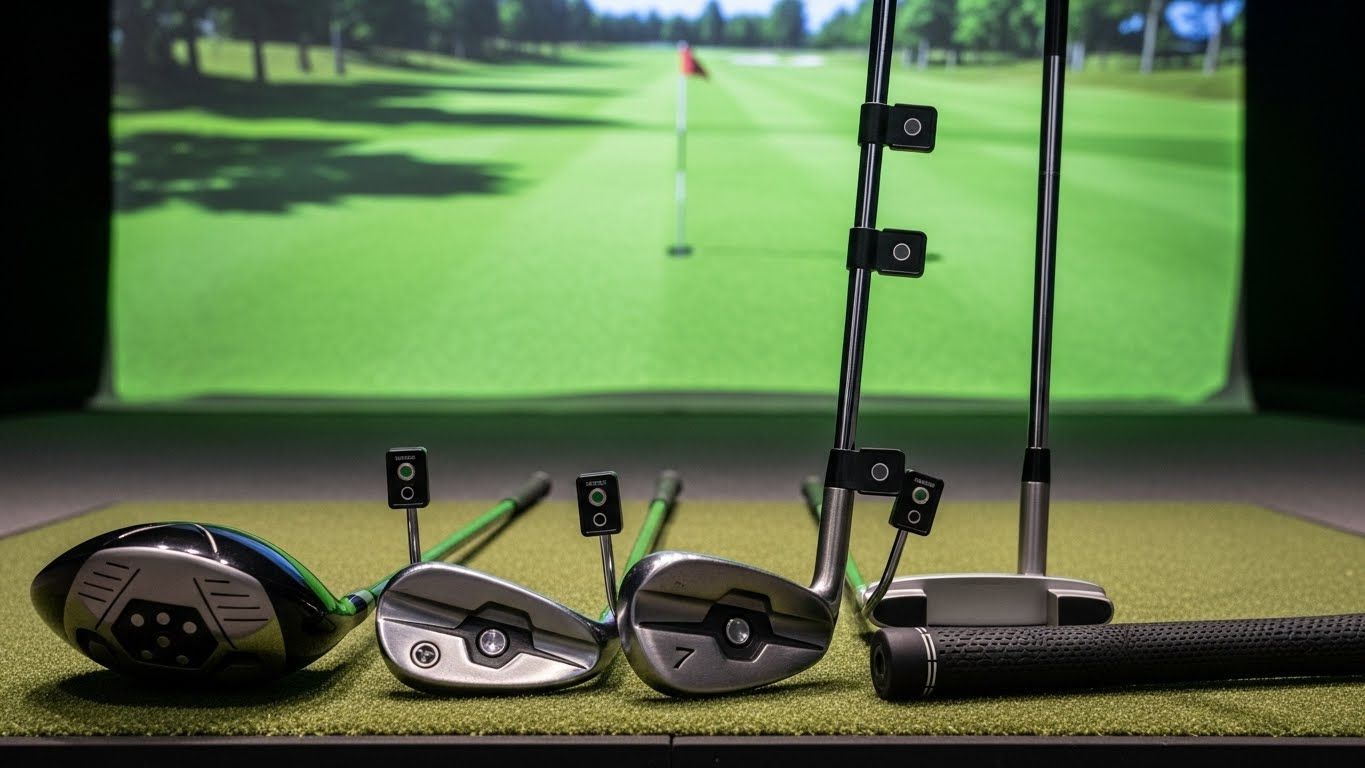
The best golf simulators track putting with enough fidelity to give you real feedback on start line, face angle at impact, and stroke path — the three things that actually determine whether a putt goes in. If your simulator has a putting green or a decent putting mat and reads the putter face at impact, you can do more productive putting practice in thirty minutes indoors than in an hour on a practice green where you're chasing balls and losing track of your data.
The drill that produces the fastest results: pick one putt length — say, eight feet — and hit fifty putts from the same spot while watching the face angle data. Most recreational golfers discover immediately that their face is open at impact by two or three degrees, which for an eight-footer produces a miss four to six inches right of center. Knowing that, and then working specifically to square the face rather than just "trying harder," is how you actually get better instead of just reinforcing the same miss.
Distance control on longer putts is where most golfers lose strokes they don't even notice. Simulator software with a lag putting mode — where you're trying to leave the ball within a three-foot circle rather than make everything — trains your feel for pace in a way that directly transfers to the course.