
If you've ever wanted the structure and social energy of a golf league without the five-hour Saturday commitment or the weather dependency, indoor golf leagues are worth understanding. They've grown considerably alongside the simulator industry, and the format has gotten refined to the point where a well-run indoor league feels like a genuinely complete competitive experience — not a consolation prize for when outdoor golf isn't available.
How Indoor Golf Leagues Work and Why They're Growing in Popularity
If you've invested in a home golf simulator and you're playing serious rounds on it, the question of whether those rounds count toward your official handicap index comes up eventually. The short answer is that most simulator rounds do not count toward an official USGA or World Handicap System index — but the longer answer is more interesting, because what a simulator can do for your handicap tracking is actually more useful than most golfers realize.

Get a Free Quote
Contact Us
The basic structure
Most indoor golf leagues run on a weekly or biweekly session schedule, typically through the fall and winter months when outdoor golf is either impossible or miserable depending on where you live. Players or teams are assigned tee times on simulator bays, play a set number of holes — usually nine or eighteen depending on the format and the venue's scheduling constraints — and post their scores against other participants playing the same virtual course that week.
The course rotates regularly to keep things fresh and to test different aspects of players' games. One week might be a links-style course that rewards bump-and-run approaches and punishes wild drives. The next might be a parkland layout where iron play and green-reading matter more. Playing different courses on the same simulator platform creates variety that keeps the competitive experience from going stale over a multi-month season.
Handicaps are central to how indoor golf leagues work in most formats. Either players bring an established outdoor handicap index that gets applied to their simulator scores, or the league uses internally calculated simulator handicaps based on prior rounds on the same system. Either way, the goal is the same as any handicap league — giving players of different abilities a genuine chance to compete against each other in the same field rather than a scratch golfer automatically winning every week.
The formats vary more than you'd expect
Stroke play is the most straightforward — lowest net score wins — and it's the most common format for individual leagues. But a lot of indoor leagues have moved toward team formats because they're more social and more forgiving for players whose games are streaky.
Two-person scramble is popular because it allows a weaker player to contribute meaningfully even on their off nights — your partner's good shots bail you out, and your good shots bail out your partner. Match play formats work well in simulator leagues because the head-to-head structure creates specific matchups that generate conversation and friendly rivalry over the course of a season.
Some venues run Ryder Cup-style events where teams compete in a mix of foursomes, four-ball, and singles matches across a single evening — which is one of the more genuinely fun golf formats in any setting, indoor or outdoor. The team competition element changes the energy in the room completely compared to individual stroke play.
What makes a well-run indoor league worth joining
The difference between an indoor golf league that people look forward to every week and one that fizzles out by February comes down to a few things. Consistent tee times that don't shift around unpredictably. A scoring system that's transparent and easy to follow. A leaderboard that's updated and visible so players can track standings throughout the season. And some kind of end-of-season event — a championship round, a party, an awards night — that gives the whole thing a narrative arc rather than just stopping when the calendar runs out.
The social element is harder to quantify but probably the most important factor in long-term league health. Indoor golf leagues that build a real community — where people linger after their round, where there's food and drinks available, where the same groups show up week after week and develop real rivalries — retain players at much higher rates than leagues that feel purely transactional. The best ones start to feel like the same reason people join outdoor leagues in the first place: not just to play golf, but to have a reason to see the same people every week through the months when the calendar is otherwise thin.


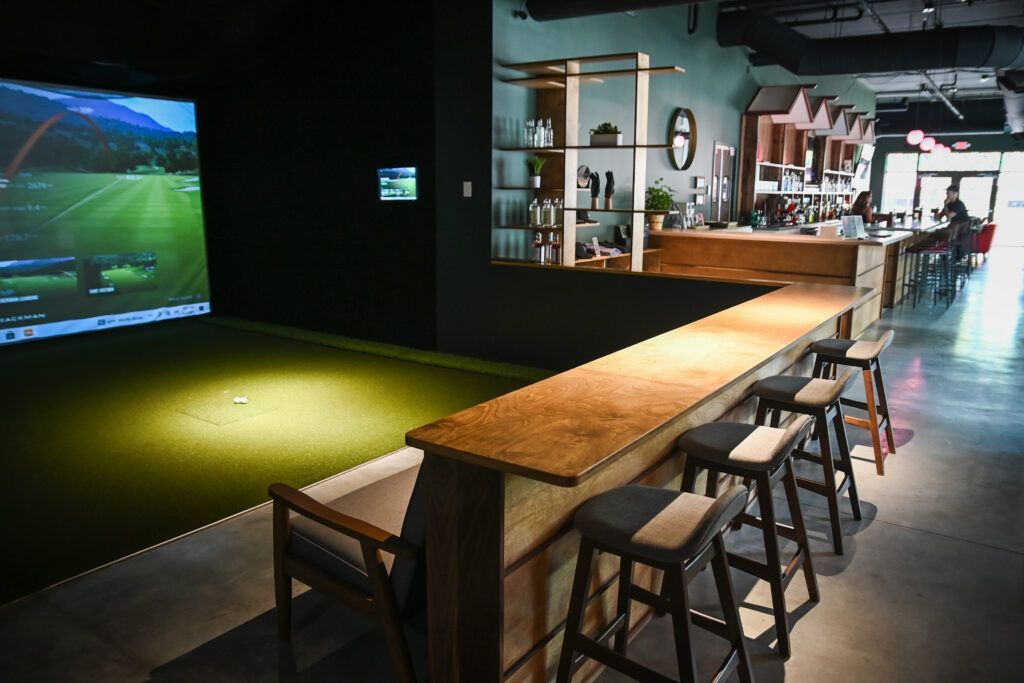
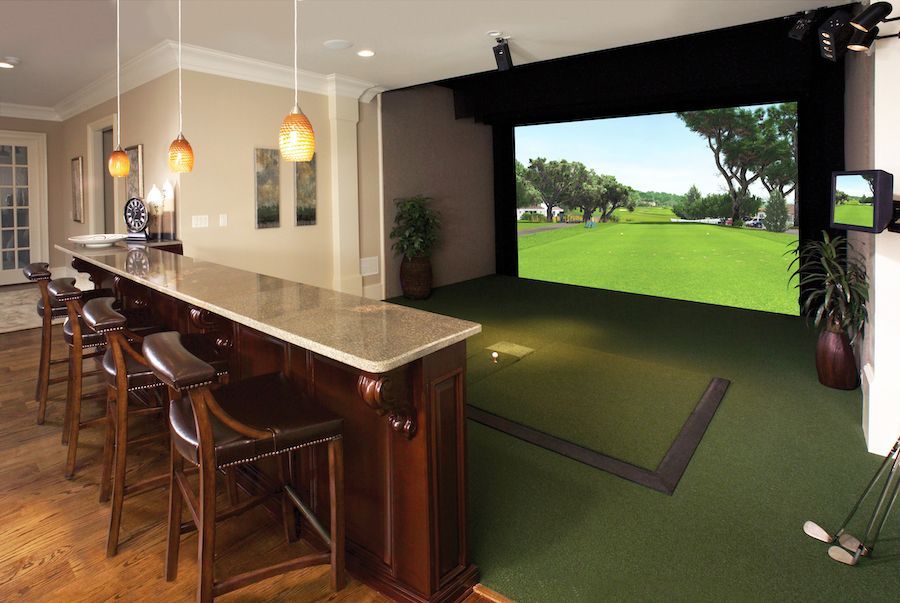

Des Moines Indoor Golf Installation Near Me?
If you're looking to join an existing indoor league, simulator venues in your area are the first place to check. Most facilities that run leagues advertise them on their website or social media, and spots often fill up quickly once a season gets going — so reaching out early in the fall before winter leagues start is worth doing.
If you're a business considering running a league on your commercial simulators, the format is one of the most reliable ways to build a consistent customer base rather than relying entirely on walk-in traffic. A league player who commits to a twelve-week season is a fundamentally different customer than someone who books a one-off bay rental — and the community that forms around a well-run league tends to generate referrals and return visits well beyond the season itself.
Understanding how indoor golf leagues work is really just the starting point. The experience of actually playing in one — the weekly rhythm, the competition, the people — is what makes most golfers wonder why they waited so long to sign up.